

A lapsed LEI is easy to overlook until it starts getting in the way of something important. Many companies only think about their Legal Entity Identifier when a bank, broker or investment platform asks for it. Once the code has been issued, it can feel like the job is done.
But an LEI number is tied to live reference data about your legal entity. That data needs to be reviewed and renewed regularly, so the record stays reliable for trading, reporting, onboarding and compliance checks. If the renewal date passes, the LEI status changes to lapsed.
This does not usually mean the LEI has disappeared or that the entity needs a new code. It means the record is overdue for revalidation. Banks, brokers and counterparties may still be able to find the LEI, but they may not treat the data as current until the record is renewed.
For most entities, fixing a lapsed LEI is straightforward. The bigger risk is only discovering the problem when a transaction, account opening or reporting process is already waiting.
What Is an LEI?
A Legal Entity Identifier, or LEI, is a 20 character alphanumeric code used to identify legal entities that take part in financial transactions. It acts as a globally recognised reference number for companies, funds, trusts, charities and other legal entities.
An LEI helps banks, brokers, regulators and counterparties identify exactly which entity is involved in a transaction. This matters because legal entity names can be similar, company structures can be complex and local registration numbers are not always easy to compare across jurisdictions.
If you need a broader explanation before getting into renewal status, our guide on what an LEI number is covers the basics in more detail.
In simple terms, an LEI connects a legal entity to verified reference data, such as:
- Official legal name
- Registered address
- Registration authority
- Entity status
- LEI issuer
- Parent entity details, where applicable
- Next renewal date
- Current LEI registration status
This public record is useful only if the data remains accurate. That is why renewal matters.
Lapsed LEI Meaning: What Does a Lapsed LEI Mean?
A lapsed LEI means the LEI record has not been renewed by its required annual renewal date. The code still exists, but the reference data attached to it has not been revalidated on time.
This is the most important point behind the phrase LEI status lapsed. It does not automatically mean:
- The company has closed
- The LEI number has been deleted
- The entity must apply for a new LEI
- The code can no longer be found in the LEI database
Instead, the LEI status lapsed meaning is that the record is overdue for its annual check.
An active LEI tells banks, brokers and counterparties that the entity data has been recently reviewed. A lapsed LEI tells them that the data is no longer current according to the annual validation cycle.
Active LEI vs Lapsed LEI
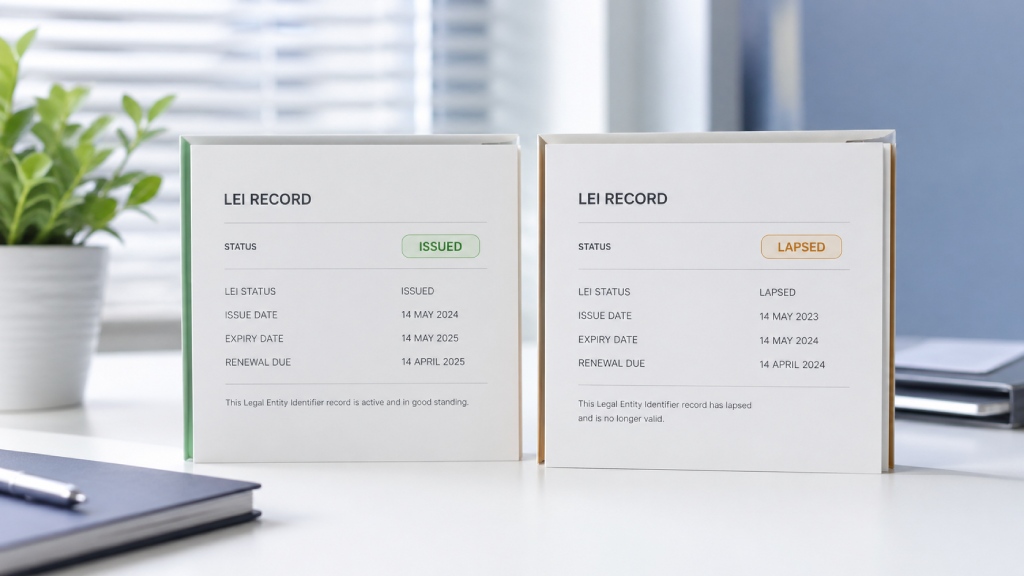
The difference between an active LEI and a lapsed LEI is easiest to understand in a simple comparison.
| Registration status / record situation | What it means | Why it matters |
| ISSUED | The LEI exists and its reference data has been renewed within the applicable period. | Usually supports smoother trading, reporting, onboarding, and verification workflows. |
| LAPSED | The LEI still exists, but the renewal/revalidation deadline has passed. | May lead to delays, extra checks, or requests to renew before certain processes continue. |
| Entity inactive / retired-type situation | The legal entity may have become inactive because of closure, dissolution, merger, or another legal event, and the LEI record may reflect that through entity-status and/or registration-status fields. | This is not the same as a routine lapse and may require a different record update rather than a standard renewal. |
For most operating companies, a lapsed LEI is a renewal issue. It is usually resolved by renewing the existing LEI record rather than applying for a new code.
Why Does an LEI Lapse?
An LEI usually lapses because the annual renewal deadline was missed. In many cases, this is not intentional. It often happens because the LEI was registered during a specific transaction or onboarding process, then forgotten once that immediate need was resolved.
Common reasons include:
- Renewal reminders went to an old email address
- The original applicant left the company
- The company assumed the LEI was permanent without annual renewal
- Internal compliance ownership was unclear
- The entity only uses its LEI occasionally
- Company details changed and the record was not updated
- The LEI was managed through another provider and nobody tracked the renewal date
This is why it helps to treat LEI management as part of your wider compliance calendar, especially if your entity depends on uninterrupted trading or reporting access.
Why You Should Keep Your LEI Active
Keeping your LEI active is not just about avoiding a lapsed status label. It helps protect your ability to operate smoothly with financial institutions.
An active LEI shows that your entity’s reference data has been recently confirmed. That can reduce friction when a bank, broker, investment platform, auditor or counterparty needs to verify your entity.
A lapsed LEI, on the other hand, can create unnecessary checks. Even if the underlying entity information has not changed, the public record still shows that the annual revalidation is overdue.
Keeping your LEI active can help with:
- Trading access
- Regulatory reporting
- Bank and broker onboarding
- Due diligence checks
- Audit support
- Counterparty verification
- Internal compliance management
If you are not sure whether your LEI is currently active, you can use the LEI search tool to look up your record by company name or LEI code.
LEI Lapsed Consequences: What Can Happen?
The consequences of a lapsed LEI depend on how your entity uses the code. Some businesses may not notice the issue immediately. Others may encounter problems as soon as they try to trade, open an account or complete a financial compliance process.
Trade Delays or Blocked Transactions
One of the most common lapsed LEI consequences is a delay in trading activity. Financial institutions may need an active LEI before they can process certain transactions for legal entities.
If the LEI status is lapsed, a broker or bank may ask for the record to be renewed before the transaction can continue. This can be frustrating if the issue is only discovered at the point of trade.
The problem is often not that renewal is impossible. It is that the timing is inconvenient. A simple renewal task can become urgent if a transaction is already waiting.
Regulatory Reporting Issues
LEIs are used in financial reporting because they help identify the legal entity behind a transaction. If the LEI record is lapsed, it may raise questions about whether the entity data is current enough for the reporting workflow.
A lapsed LEI can create extra admin for compliance teams, especially if the issue needs to be resolved before reports, transaction records or internal checks can move forward.
Bank and Broker Onboarding Delays
Banks, brokers and investment platforms often check LEI records during onboarding. If your LEI is lapsed, they may pause the process until renewal is complete.
This can affect:
- New account opening
- Investment platform access
- Broker setup
- KYC checks
- Corporate verification
- Documentation requests
If your organisation is preparing for financial activity, checking the LEI status early can help avoid last minute friction.
Counterparty Questions
LEI records are public. If a counterparty searches your entity and sees that the LEI is lapsed, they may ask why the record has not been maintained.
This does not automatically mean they will refuse to work with you. Still, it creates an avoidable question. For entities that want to present a clean compliance profile, an active LEI is preferable.
More Reactive Admin
When an LEI lapses, the renewal process often happens under pressure. The company may need to confirm entity details, gather documents or update ownership information quickly.
This is especially common when the lapsed LEI is discovered during:
- A trade request
- Bank onboarding
- Audit preparation
- A reporting deadline
- A counterparty review
Renewing before the deadline is usually much easier than fixing the issue after it becomes a blocker.
Does a Lapsed LEI Mean You Need a New LEI?
No, usually not. If your entity already has an LEI, you should normally renew the existing record instead of applying for a new one.
Each legal entity should have one unique LEI. Creating a duplicate record can cause confusion and may not be accepted during validation. The correct process is usually to locate the existing LEI, check its status and renew it.
If you cannot find your entity’s LEI, search by the legal entity name first. If the record exists, you can then review the status, issuer and renewal date.
How to Check If Your LEI Is Lapsed
You can check whether your LEI is lapsed by searching for the entity record. The easiest option is to search by LEI code if you already have it. If not, search by the company or entity name.
When reviewing the record, check:
- LEI code
- Legal entity name
- Registered address
- Registration status
- Entity status
- Managing issuer
- Next renewal date
- Parent entity information, if applicable
The status field is especially important. An LEI can still appear in search results even when it is lapsed, so do not assume that finding the code means everything is current.
What Is Lapsed LEI Renewal?

Lapsed LEI renewal is the process of revalidating an overdue LEI record and returning it to active status.
The LEI code itself usually stays the same. The LEI update and renewal process focuses on checking and confirming the entity data attached to that code.
Here is how the process usually works.
| Step | What happens | Why it matters |
| 1. Find the existing LEI | Search by LEI code or legal entity name. | Prevents duplicate LEI applications. |
| 2. Review entity details | Check the legal name, address, registration number and status. | Ensures the public record reflects the correct entity. |
| 3. Update outdated data | Amend changed details, such as address or ownership information. | Keeps the LEI record accurate. |
| 4. Submit renewal | Send the renewal request for validation. | Starts the process of restoring active status. |
| 5. Confirm status | Check the record after renewal. | Verifies that the LEI is no longer lapsed. |
LEI Renewal vs LEI Update vs LEI Transfer
Renewal, update and LEI transfer are related, but they are not the same thing.
| Process | Purpose | When it is needed |
| LEI renewal | Revalidates the LEI record for another year. | When the annual renewal date is approaching or has passed. |
| LEI update | Changes the entity reference data on the LEI record. | When the legal name, address, ownership or other details have changed. |
| LEI transfer | Moves LEI management from one provider to another. | When you want another provider to manage renewal and updates. |
What Information Is Checked During LEI Renewal?
During renewal, the LEI reference data is checked to confirm that it still matches the legal entity’s current details.
This may include:
- Registered legal name
- Trading name, where relevant
- Registered office address
- Headquarters address
- Company registration number
- Legal jurisdiction
- Entity legal form
- Entity status
- Direct parent information
- Ultimate parent information
- Applicable reporting exceptions
If nothing has changed, the renewal may be straightforward. If the entity has changed name, address, ownership structure or legal status, those details should be updated before the record is renewed.
This is important because a renewed LEI should not simply be active. It should also be accurate.
How Long Does It Take to Renew a Lapsed LEI?
The renewal time depends on the entity, the quality of the available data and whether any details need to be corrected. If the legal entity information is clear and matches official records, renewal is usually faster. If the record contains outdated or conflicting details, validation may take longer.
That is why it is better to start early. Waiting until a bank or broker flags the lapsed LEI can turn a routine renewal into an urgent compliance task.
For entities that need proof of an active LEI after renewal, an LEI certificate can help provide a downloadable record for banks, brokers, auditors or internal files.
How Much Does It Cost to Renew an LEI?
LEI renewal costs depend on the provider and renewal term. Some entities renew for one year at a time, while others choose multi year renewal to reduce annual admin.
A multi year plan can be useful if your organisation wants to avoid missing future renewal dates. The LEI data still needs to be revalidated annually, but the process can be managed in advance.
You can review current renewal options on the LEI cost page.
How to Prevent Your LEI From Lapsing Again
Once you have renewed a lapsed LEI, the next step is prevention. The goal is to avoid discovering the problem only when a transaction or onboarding process is already waiting.
A simple internal process can help.
Keep the Renewal Date in a Compliance Calendar
Add the LEI renewal date to a shared calendar used by finance, legal, operations or compliance teams. Set reminders before the deadline, not just on the day itself.
Use a Current Contact Email
Make sure renewal notices go to an active inbox. Avoid using a personal employee email if possible, especially if team roles change often.
Assign Internal Ownership
Decide who is responsible for LEI management. This may be someone in legal, finance, treasury, compliance or company secretarial support.
Review LEI Data After Company Changes
If your entity changes its legal name, registered address, ownership structure or registration details, review the LEI record as well. Do not wait until the next renewal if the current record is already inaccurate.
Consider Multi Year Renewal
For entities that rely on their LEI for trading or reporting, multi year renewal can reduce the chance of accidental lapses. It is especially useful for groups managing several entities.
Who Should Care About a Lapsed LEI?
A lapsed LEI can matter to any legal entity that uses an LEI, but it is especially important for organisations that interact with financial markets or regulated institutions.
This may include:
- Limited companies
- Investment firms
- Funds
- Trusts
- Charities
- Pension schemes
- Special purpose vehicles
- Overseas entities with UK financial activity
- Corporate groups with multiple subsidiaries
If you are not sure whether your entity needs an LEI, our guide on who needs an LEI number explains the common use cases.
What to Do If Your LEI Status Is Lapsed
If your LEI status is lapsed, the best approach is to act quickly and avoid applying for a duplicate code.
Follow these steps:
- Search for your existing LEI record.
- Confirm that the record belongs to the correct legal entity.
- Check the current status and renewal date.
- Review the entity details for accuracy.
- Update any outdated information.
- Submit the LEI renewal.
- Confirm that the status has returned to active.
- Record the next renewal date internally.
If your entity does not have an LEI yet, you can start with LEI registration instead.
Final Thoughts: A Lapsed LEI Is Easy to Fix, But Better to Avoid
A lapsed LEI may look like a minor status change, but it can create real operational problems. It can delay trades, slow down bank or broker onboarding, raise questions during due diligence and create extra work for compliance teams.
The good news is that a lapsed LEI is usually straightforward to resolve. In most cases, you do not need a new code. You need to renew the existing LEI, check the entity details and make sure the record is accurate.
Keeping your LEI active is a simple way to reduce compliance friction. It helps banks, brokers, counterparties and regulators verify your entity with confidence, while giving your own team fewer last minute issues to manage.
Frequently Asked Questions About Lapsed LEIs
What does lapsed LEI mean?
A lapsed LEI means the LEI record has not been renewed by its annual renewal date. The LEI still exists, but the reference data is overdue for revalidation.
What does LEI status lapsed mean?
LEI status lapsed means the annual renewal deadline has been missed. The public LEI record shows that the entity information has not been recently confirmed.
Is a lapsed LEI still valid?
Yes. A lapsed LEI remains valid as an identifier, but its reference data is overdue for renewal/revalidation, so some counterparties or regulatory processes may require it to be renewed before use.
What are the main LEI lapsed consequences?
The main consequences can include trade delays, blocked transactions, onboarding issues, reporting problems, additional compliance checks and questions from counterparties.
How does lapsed LEI renewal work?
Lapsed LEI renewal involves finding the existing LEI record, reviewing the entity data, updating any outdated details and submitting the renewal for validation.
Do I need a new LEI if mine has lapsed?
Usually, no. If your entity already has an LEI, you should renew the existing record rather than applying for a new one.
How often does an LEI need to be renewed?
An LEI usually needs to be renewed every 12 months to keep the record active and the reference data current.
Can I transfer my lapsed LEI to LEI24?
Yes, in many cases you can transfer a lapsed LEI through LEI24 and renew it without changing the LEI code. LEI24 acts as a Registration Agent, while the LEI remains managed by the relevant accredited LEI issuer.